
Will it drop my brow?
This is one of the most common forehead-specific concerns. The answer depends on frontalis strength, brow height, hooded lids, dose and whether downward-pulling muscles are balanced.
Smoother horizontal forehead lines without losing natural expression, brow support or the way your face communicates.
Forehead Botox is not just a wrinkle treatment. It is a brow-support treatment. The frontalis muscle helps lift your brows, so PearlMD plans forehead Botox around movement, brow height, eyelid support and facial balance.
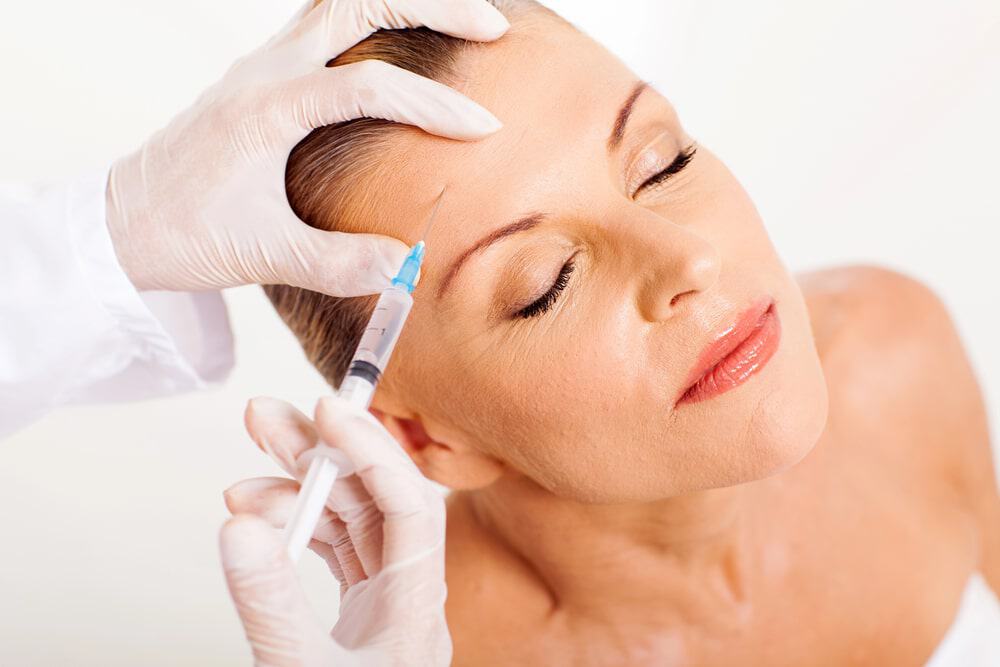
Most people considering forehead Botox want smoother lines, but they also want to avoid a heavy brow, a frozen forehead, uneven brows or a treatment plan that ignores their eyelids. Those concerns are valid, and they should be part of the consultation.
This is one of the most common forehead-specific concerns. The answer depends on frontalis strength, brow height, hooded lids, dose and whether downward-pulling muscles are balanced.
Patients often compare 8, 10, 12, 20 and 40-unit plans. The correct answer is anatomy-based, not chart-based, but a transparent range helps you understand the plan.
Forehead Botox should soften the "tired/stressed" signal while allowing enough movement to keep the face alive, especially for expressive patients.
If your concern goes beyond the forehead, you can also explore PearlMD's broader Botox Toronto guide or our Botox for men Toronto guide. During consultation, we will help you understand whether forehead-only treatment makes sense or whether your best result needs full upper-face balance.
A fast summary for patients comparing forehead Botox clinics, costs and result styles in Toronto.
| Treatment Area | Horizontal forehead lines caused by the frontalis muscle when raising the eyebrows. |
|---|---|
| Product Options | Botox or Dysport. Product choice depends on movement pattern, goals, previous response and provider recommendation. |
| Typical Forehead Units | Often 8-20 Botox units for forehead-only softening. Full upper-face balancing may require more. |
| PearlMD Standard Price | $12/unit for Botox. Dysport is priced differently because Dysport units are not equivalent to Botox units. |
| First-Visit Offer | 50 units of Botox for $300 for first-time PearlMD patients, consultation required. |
| Downtime | Minimal. Avoid rubbing the forehead, lying flat early after treatment, intense exercise and heat for the first 24 hours. |
| Onset | Movement usually starts softening within several days. Full effect is assessed at 10-14 days. |
| Duration | Commonly 3-4 months, with variation by dose, product, metabolism, muscle strength and maintenance. |
| Main Risk to Avoid | Brow heaviness from over-relaxing or poorly mapping the frontalis muscle. |
| Best Result Style | Smoother forehead lines, natural movement, balanced brows and rested eyes. |
Forehead Botox treats horizontal lines that appear when the frontalis muscle contracts. The frontalis is the broad muscle that raises the eyebrows. Every time you look surprised, lift your brows to apply makeup, animate a conversation, compensate for eyelid hooding or widen your eyes at a screen, the forehead skin folds in the same direction.
Over time, those repeated folds can become visible even when your face is relaxed. Botox and Dysport temporarily reduce selected muscle activity so the skin folds less often and the lines soften. Health Canada describes cosmetic Botox as working by blocking underlying facial muscle contraction in small injected doses [Health Canada].
Crow's feet and frown lines are mostly about softening pull. Forehead Botox is about softening pull while preserving lift. That is why a perfectly smooth forehead is not always the best clinical or aesthetic result. A little movement can be the difference between refreshed and heavy.
One reason forehead Botox results vary is that patients use the same phrase for different concerns. PearlMD first identifies what kind of forehead line is present, because the treatment plan changes.
Lines appear when you raise your eyebrows but fade at rest. These are the most Botox-responsive forehead lines and often suit a lighter, movement-preserving approach.
Lines are visible even when the face is relaxed. Botox may prevent deepening, but etched lines may need collagen-supportive skin treatments too.
Some people raise the forehead to open hooded eyes. Relaxing too much frontalis can make the eyes feel heavier, so this pattern requires extra caution.
| What You Notice | Likely Driver | What PearlMD Considers |
|---|---|---|
| Lines only when raising brows | Dynamic frontalis movement. | Botox or Dysport with conservative mapping and natural movement goals. |
| Lines visible at rest | Repeated folding plus skin quality changes. | Botox to reduce movement, plus possible skin resurfacing, microneedling or regenerative aesthetics. |
| Heavy eyelids or hooded eyes | Frontalis compensation for brow/eyelid support. | Lower dose, higher placement, glabella balance or alternative plans if heaviness risk is high. |
| One brow lifts higher | Asymmetrical muscle recruitment. | Micro-adjusted dosing rather than equal dosing on both sides. |
| Fine crepey forehead texture | Skin quality, dehydration, sun exposure or collagen loss. | Botox may help movement lines, but skin treatments may matter more for texture. |
The frontalis muscle is not treated in isolation at PearlMD. Before placing Botox or Dysport, your provider studies how the forehead, brows, eyelids and frown muscles behave together.
That assessment matters because the forehead lifts upward while several nearby muscles pull downward or inward. If the lifting muscle is relaxed without considering the downward pull, the forehead can feel heavy or the brows can sit lower than expected.
Sometimes, yes. But forehead-only Botox is not automatically the safest or most natural-looking plan.
The official BOTOX Cosmetic label lists forehead-line treatment as a forehead plus glabellar-line dose, because the forehead and frown muscles work as an upper-face system [DailyMed label]. In plain terms: the frontalis lifts the brow; the frown muscles pull down and inward. Treating one without considering the other can create imbalance.
Forehead-only Botox may be appropriate when the dose is light, the brow is naturally supported, the eyelids are not heavily hooded and the patient wants subtle softening. If the frown muscles are strong, brows sit low or the forehead is being used to hold the eyes open, PearlMD may recommend treating the frown lines too, using a smaller forehead dose, or choosing a different sequence.
Forehead Botox cost depends on the number of Botox units required, whether the forehead is treated alone, whether frown lines are balanced at the same visit and whether the plan uses Botox or Dysport.
PearlMD's standard Botox pricing is $12/unit, so 50 units is regularly $600. The first-visit offer brings 50 units to $300. For forehead Botox, your provider confirms whether those units are best used for forehead-only softening, forehead plus frown-line balance, or a broader upper-face plan.
| Plan | Typical Botox Units | Approx. PearlMD Cost at $12/unit | Best For |
|---|---|---|---|
| Baby Botox Forehead | 6-12 units | $72-$144 | Early lines, first-time patients, very natural movement. |
| Forehead-Only Softening | 8-20 units | $96-$240 | Dynamic horizontal lines with good brow support. |
| Forehead + Frown Balance | 30-40+ units | $360-$480+ | Forehead lines plus strong 11s or downward brow pull. |
| Full Upper-Face Planning | 50+ units | $600+ standard, first-visit offer may apply | Forehead, 11s, crow's feet and overall upper-face movement. |
These are planning ranges, not prescriptions. Your exact cost is confirmed after facial movement assessment. Dysport is quoted differently because Dysport units are not equivalent to Botox units.
Heavy brows after forehead Botox happen when the forehead-lifting muscle is relaxed more than the face can tolerate. The risk is higher if Botox is placed too low, if too many units are used, if the person already has low brows or hooded lids, or if the frown muscles are still pulling downward.
The BOTOX Cosmetic label lists brow ptosis as a known adverse reaction in forehead-line treatment [DailyMed label]. That is exactly why forehead Botox needs thoughtful anatomy assessment.
When appropriate, dosing is kept higher on the forehead and conservative around areas that support the brow.
Strong frown muscles or outer-eye depressor activity may need to be considered so the brows do not feel pulled downward.
Final results are judged after settling. PearlMD avoids chasing movement too early before the product has fully taken effect.
If you raise your eyebrows constantly to open your eyes, the forehead muscle may be acting like a support system. In that case, over-smoothing can make the eyes feel smaller or heavier. Your provider may recommend a lighter dose, combination planning or a different treatment priority.
Your forehead plan should match the result you actually want. PearlMD's approach changes depending on whether your goal is prevention, softening, event readiness, movement preservation or deeper-line support.
| Your Goal | Likely Approach | What to Avoid |
|---|---|---|
| First-time forehead Botox | Start conservatively, preserve movement and reassess at 10-14 days. | Overtreating because of anxiety about every line. |
| Baby Botox forehead | Micro-dose for early horizontal lines and prevention. | Expecting deep static lines to vanish with a mini dose. |
| Strong eyebrow raising | Map frontalis strength and consider whether frown-line balance is needed. | Forehead-only treatment when depressor pull is strong. |
| Hooded eyes or low brow | Use caution, preserve lift and consider alternatives or lower dosing. | Chasing a completely smooth forehead. |
| Event preparation | Book 2-3 weeks ahead, or 4-6 weeks if it is your first time. | Treating right before photos, weddings or public events. |
| Deep etched lines | Use Botox to reduce movement and add skin-quality treatments when appropriate. | Assuming Botox alone replaces collagen repair. |
A forehead treatment is quick, but the planning should not feel rushed. The result depends on what happens before the injection.
Your provider reviews goals, medications, allergies, previous injectable history, neuromuscular conditions, pregnancy/breastfeeding status and event timing.
You raise your brows, relax, frown, smile and look upward so the provider can see frontalis strength, asymmetry, brow support and compensatory movement.
Botox or Dysport is selected, units are reviewed and pricing is confirmed before treatment. If frown-line balance is recommended, it is explained clearly.
The forehead is cleansed and small amounts of product are placed using a fine needle. Most patients describe the sensation as quick pinches.
You receive aftercare instructions and are reminded not to judge the final result until the 10-14 day mark.
Forehead Botox results unfold gradually. This timeline helps prevent early panic and premature judgment.
| Immediately After | Small bumps, redness or tenderness may appear and usually settle quickly. No visible smoothing yet. |
|---|---|
| Days 2-4 | Some patients notice movement beginning to soften, especially with Dysport. Others notice little change yet. |
| Days 5-7 | Forehead movement usually becomes more limited and horizontal lines begin to soften. |
| Days 10-14 | Full effect is assessed. This is the appropriate window to evaluate symmetry, movement and whether refinement is needed. |
| Months 2-3 | Results are usually stable. Less repetitive folding may also help lines look less pronounced over time. |
| Months 3-4 | Movement gradually returns. Maintenance can be planned before lines fully re-establish. |
Aftercare is simple, but it matters. The goal is to reduce bruising risk and avoid unnecessary pressure on the treated area while the product begins settling.
Both Botox and Dysport can soften forehead lines. The choice is not about one being universally better. It depends on forehead size, movement pattern, desired onset, previous response and whether the provider wants more precision or broader diffusion.
| Question | Botox | Dysport |
|---|---|---|
| Good for forehead? | Yes. Often chosen when precise dose control is preferred. | Yes. Often considered for broader forehead movement zones. |
| Onset | Often begins in 3-7 days. | May begin a little sooner for some patients. |
| Units | Measured in Botox units. | Dysport units are not equivalent to Botox units. |
| Duration | Commonly 3-4 months. | Commonly similar, with individual variation. |
| Cost comparison | Total treatment cost is usually more useful than comparing unit counts because units convert differently. | |
For broader product comparison, visit PearlMD's Dysport Toronto guide and Botox vs Dysport vs Xeomin vs Nuceiva guide.
Botox and Dysport reduce the muscle movement that keeps folding the skin. They do not directly replace collagen, reverse sun damage or resurface etched creases. If a line remains visible when the forehead is fully relaxed, the best plan may combine movement control with skin-quality work.
Treat the muscle when movement is the driver. Treat the skin when collagen, texture and photodamage are the driver. The best forehead result often comes from knowing which problem you are solving first.
PearlMD's advantage is not only offering Botox. It is evaluating the forehead inside a larger system: facial movement, skin aging, brow position, hormone-related skin changes, regenerative aesthetics and the patient's long-term vitality plan.
Forehead Botox and Dysport treatments are performed by a Registered Nurse injector and physician-led team under PearlMD's clinical standards. Your provider reviews anatomy, medical history, dosing and goals before treatment.
Some movement is often desirable. PearlMD prioritizes refreshed, relaxed, expressive results over a shiny, stiff forehead that no longer matches the eyes.
Forehead Botox can be planned alone or with frown lines, crow's feet or a subtle brow strategy when indicated. This helps reduce the risk of treating one muscle while ignoring the forces around it.
If forehead lines are etched into the skin, PearlMD can connect Botox planning with regenerative aesthetics, skin treatments and longevity-minded care.
Instead of inventing testimonials, this section summarizes the real concerns people bring to forehead Botox consultations. For actual patient feedback, visit PearlMD's reviews page.
Patients want fewer visible forehead lines without looking frozen, surprised or unlike themselves.
Patients worry about heavy brows, uneven brows and hooded lids. The forehead has to be planned with the eyes.
Patients want to know units, pricing, timing and whether the 11s should be included before injections begin.
Answers to the forehead-specific questions patients commonly ask before booking.
Forehead Botox is a neuromodulator treatment that relaxes selected frontalis muscle activity to soften horizontal forehead lines while preserving natural brow support and expression.
Many forehead treatments use about 8-20 Botox units, but the right dose depends on forehead height, brow position, muscle strength, asymmetry, line depth and whether frown lines are treated too.
At PearlMD, standard Botox pricing is $12 per unit. A typical forehead-only treatment may range from roughly $96 to $240 based on 8-20 units, while full upper-face balancing may require more. First-time PearlMD patients may be eligible for 50 units for $300.
It can if the frontalis muscle is over-relaxed or injected too low, especially in people with hooded lids or a low brow. PearlMD assesses brow support before treatment to reduce the risk of heaviness.
Often, yes. The forehead muscle lifts the brow while frown muscles pull downward. Treating both areas can create better balance, but the right plan depends on your anatomy and goals.
Forehead Botox commonly lasts about 3-4 months. Duration varies by dose, product, muscle strength, metabolism, exercise intensity and maintenance schedule.
Movement usually begins to soften within several days. The full result is assessed at 10-14 days.
Yes, if the treatment is planned conservatively. PearlMD prioritizes softening lines while preserving natural expression instead of freezing the forehead completely.
Botox helps most when lines are caused by movement. Deep lines visible at rest may also need skin resurfacing, microneedling, skin boosters, regenerative aesthetics or other collagen-supportive treatments.
Yes. Men often need different dosing and brow planning because forehead muscles may be stronger and brows may sit lower. PearlMD links forehead planning with masculine facial structure when appropriate.
Baby Botox for the forehead uses a lighter dose for subtle softening, prevention and more preserved movement. It can be a good option for first-time patients or early dynamic lines.
Dysport can be an excellent option for broader forehead movement zones. Units are not equivalent to Botox units, so product choice and dose are confirmed during consultation.
Plan forehead Botox at least 2-3 weeks before an event. First-time patients should consider 4-6 weeks to allow assessment and possible refinement.
Sometimes. Forehead-only Botox may work for mild dynamic lines and good brow support. If frown muscles are strong, combining treatment may create better balance.
Horizontal forehead lines are caused by repeated contraction of the frontalis muscle, which raises the eyebrows. Skin quality, sun exposure, collagen loss and genetics influence how visible they become.
Forehead Botox itself relaxes the brow-lifting frontalis, so it is not a simple brow lift. A brow-lift effect may come from carefully treating downward-pulling muscles around the brows, not from over-relaxing the forehead.
A very smooth, low-movement forehead can reflect light differently and look shiny. If that is not your goal, PearlMD can plan a more movement-preserving result.
Most patients describe the injections as quick pinches. The treatment is usually brief and typically does not require numbing.
Avoid intense exercise, hot yoga, sauna and heavy sweating for 24 hours. Light walking is fine.
It is best to avoid applying makeup directly over the treated forehead for the rest of the day so you do not rub or press on injection sites.
Possibly, but you need careful assessment. If your forehead is helping lift the brows to open the eyes, overtreatment can make hooding feel worse.
Forehead lines run horizontally across the forehead and come from raising the brows. Frown lines, or 11s, sit between the brows and come from muscles that pull the brows inward and downward.
Forehead Botox and Dysport treatments at PearlMD are performed by a Registered Nurse injector and physician-led team under PearlMD's clinical standards.
PearlMD Rejuvenation is located at 1650 Yonge Street in Midtown Toronto, steps from St. Clair subway station.
PearlMD Rejuvenation is located on Yonge Street in Midtown Toronto, steps from St. Clair subway station. Patients visit us for forehead Botox, forehead wrinkle treatment, Botox for forehead lines and upper-face Botox near Yonge & St. Clair.
Mon-Tue - 8:00 AM - 5:00 PM
Wed-Thu - 8:00 AM - 7:00 PM
Fri - 8:00 AM - 5:00 PM
Sat - 10:00 AM - 3:00 PM
Sun - Closed
TTC: St. Clair Station on Line 1. Street parking and paid lots nearby. Convenient access from Rosedale, Summerhill, Forest Hill, Yorkville, Deer Park, Davisville and downtown Toronto.
These non-competitor sources support the safety, regulatory and clinical education above. They are provided for patient education and do not replace medical consultation.