
Underarms are the most common
Axillary hyperhidrosis is the clearest Botox use case, with a common dose of 50 units per underarm.
A physician-led treatment for excessive underarm, palm, scalp or facial sweating that helps you feel dry, composed and at ease in your body.
Hyperhidrosis is not just "sweating a lot." It can shape what you wear, how you move through work and social settings, and how relaxed you feel in your own skin. Botox can temporarily reduce sweating in targeted areas by blocking the nerve signals that activate sweat glands.
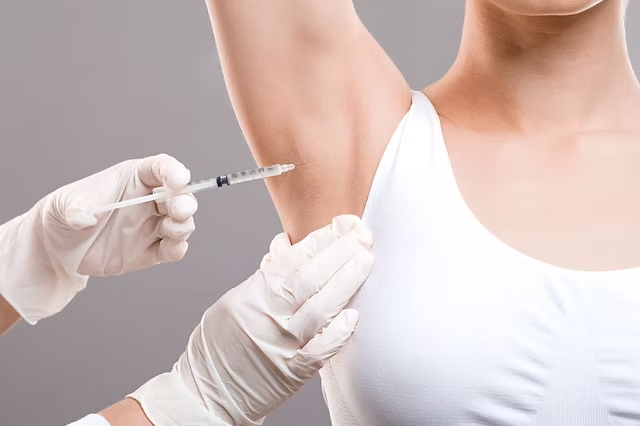
People seeking Botox for hyperhidrosis usually want very practical answers: will it actually stop sweat marks, how many injections are involved, how many units are needed, whether insurance may help, whether it hurts, and whether treating one area makes sweating worse somewhere else.
The short answer: Botox can meaningfully reduce sweating in the treated area for many patients, especially for underarm hyperhidrosis. But the right plan depends on where you sweat, whether the sweating is focal or generalized, and whether there is a medical reason that should be addressed first.
Axillary hyperhidrosis is the clearest Botox use case, with a common dose of 50 units per underarm.
Hands and feet can be treated in selected patients, but comfort planning and temporary weakness risk matter more.
New generalized sweating, night sweats or sweating with other symptoms should be medically reviewed before focal treatment.
A practical summary for patients comparing excessive sweating treatment in Toronto.
| Treatment Type | Therapeutic neuromodulator treatment using Botox for focal excessive sweating. |
|---|---|
| Most Common Area | Underarms, also called axillary hyperhidrosis. |
| Other Areas Assessed | Palms, soles, scalp, forehead, face and selected focal sweating patterns. |
| Typical Underarm Dose | 50 Botox units per underarm, or 100 units total, is a common evidence-based dose for severe primary axillary hyperhidrosis. |
| Treatment Time | Often 20-30 minutes depending on area mapping, comfort needs and number of injection points. |
| Downtime | Minimal. Most people return to work or normal daily activity the same day. |
| Onset | Often begins within several days. Full effect is usually assessed at 10-14 days. |
| Duration | Often 4-12 months depending on area and response. Axillary studies report a median response around 6-7 months. |
| Standard Price | $12/unit for Botox at PearlMD. Final quote depends on treatment area and total units. |
| Insurance | Some private extended health plans may cover part of diagnosed hyperhidrosis treatment. Coverage varies by plan. |
Hyperhidrosis means sweating beyond what the body needs for temperature regulation. It can be focal, affecting specific areas like the underarms or palms, or it can be more generalized. Primary focal hyperhidrosis often starts earlier in life, may run in families and usually affects symmetrical areas such as both underarms or both palms.
Secondary sweating is different. It may be related to medications, thyroid changes, hormonal shifts, menopause, infection, diabetes, anxiety states or other medical conditions. This distinction matters because Botox treats the local sweat signal; it does not diagnose or fix a whole-body cause of sweating.
Ageless vitality is not only how you look. It is also how comfortable and regulated you feel in your own body. If sweating is focal, Botox may be a practical treatment. If sweating is part of a larger hormonal, metabolic or health pattern, PearlMD can help you think more broadly.
Excessive sweating can be invisible to everyone else and still occupy a huge amount of mental space. Many patients have already built their wardrobe, work habits and social routines around managing sweat.
People often avoid colors, silk, fitted shirts, blazers, dresses or fabrics that show underarm marks.
Presentations, meetings, dates, events and handshakes can feel stressful when sweat is unpredictable.
Patients often want fewer clothing changes, fewer antiperspirant layers and less checking throughout the day.
The best-studied and most common treatment area is the underarms. Other sites can be considered, but they require more individualized planning because comfort, dose and side-effect profiles differ.
| Area | Why Patients Treat It | Planning Notes |
|---|---|---|
| Underarms | Sweat marks, odor concerns, clothing restrictions, social and professional discomfort. | Commonly 50 units per underarm, or 100 units total. |
| Palms | Wet handshakes, slipping grip, paper or device issues, embarrassment in work or social settings. | More sensitive; temporary hand weakness can occur. |
| Soles | Wet feet, shoe discomfort, odor concerns, slipping, skin irritation. | Can be sensitive; footwear and walking comfort are discussed. |
| Scalp | Sweating through hairline, scalp dampness, event anxiety, styling disruption. | Custom mapping; dosing depends on area size. |
| Forehead / Face | Visible facial sweating, makeup breakdown, professional or social distress. | Requires extra caution near muscles that affect brow, eyelids and expression. |
Sweat glands are activated by nerve signals. Botox temporarily blocks the release of acetylcholine, the chemical messenger that tells sweat glands to produce sweat. When the signal is reduced in the treated area, sweating decreases there.
This is different from facial Botox for wrinkles, where the target is muscle movement. For hyperhidrosis, the target is the sweat-gland signal. The product is placed superficially in the skin across the sweating zone, often in a grid-like pattern.
The BOTOX product monograph lists severe primary axillary hyperhidrosis as an indication when topical agents have not adequately managed sweating, and identifies 50 units per axilla as the recommended dose [BOTOX Product Monograph].
Botox does not shut down whole-body sweating. It reduces sweating in the treated focal area, while the rest of the body can still sweat for temperature regulation. Compensatory sweating is more commonly discussed with surgical nerve procedures, not routine localized Botox treatment.
Hyperhidrosis treatment uses more units than most cosmetic facial Botox areas. That is why cost clarity is important before you book.
PearlMD's standard Botox pricing is $12/unit. A typical 100-unit underarm hyperhidrosis treatment would be $1,200 at standard per-unit pricing. If private insurance documentation is relevant, PearlMD can provide appropriate receipts or documentation when clinically appropriate.
| Area | Typical Unit Logic | Cost Notes |
|---|---|---|
| Underarms | Commonly 50 units per underarm, 100 total. | Often the most straightforward area to quote. |
| Palms | Highly individualized; may require substantial units depending on surface area. | Comfort planning and temporary weakness risk are part of the quote. |
| Soles | Customized by sweating pattern and treatment area size. | Usually quoted after assessment due to sensitivity and area size. |
| Scalp / forehead / face | Custom micro-mapping and conservative dosing. | Quoted by area and anatomy because nearby muscle effects matter. |
PearlMD's first-visit cosmetic Botox offer may not be the right structure for underarm hyperhidrosis because underarms commonly require 100 units total. Your provider will confirm the appropriate pricing pathway during consultation.
Underarm sweating is the most common hyperhidrosis Botox treatment because the area is accessible, the treatment is quick, and the evidence is strongest. Patients often seek it after antiperspirants irritate the skin, do not work well enough, or feel like a constant daily chore.
Treatment usually involves many small injections across the sweating zone. The goal is not to make the body unable to sweat; it is to reduce excessive underarm sweat enough that clothing, work and social life feel easier.
Competitor pages often list every sweating area as if they are the same. They are not. Palms, feet, face and scalp can be life-changing areas to treat, but they require different conversations.
Palmar hyperhidrosis can affect handshakes, phones, laptops, paperwork, sports, instruments and intimate touch. Botox may help selected patients, but the palms are sensitive and temporary hand weakness can occur. This is discussed before treatment.
Foot sweating can affect shoes, odor, skin irritation and slipping. The soles can be sensitive, so comfort planning matters.
Facial and scalp sweating can be very visible and distressing. These areas need conservative mapping because nearby muscles influence brow position, eyelids and expression. If your concern is cosmetic forehead lines rather than sweat, visit the forehead Botox Toronto guide.
Botox is not the only option for excessive sweating. A good plan should acknowledge what you have already tried and what tradeoffs you are willing to accept.
| Option | Best For | Tradeoffs |
|---|---|---|
| Clinical-strength antiperspirants | Milder underarm sweating or first-line treatment. | Can irritate skin and may not be enough for severe sweating. |
| Prescription wipes or creams | Selected areas, especially when advised by a medical provider. | May cause dryness, irritation or systemic anticholinergic effects in some patients. |
| Iontophoresis | Hands and feet, especially for patients who prefer a device-based home approach. | Requires repeated sessions and maintenance. |
| Botox | Focal sweating, especially underarms, when topical approaches are not enough. | Temporary, requires repeat treatment, area-specific side effects. |
| miraDry | Underarm sweating for patients seeking a device-based sweat gland treatment. | Underarm-focused; not for palms, feet or scalp. |
| Surgery / sympathectomy | Severe selected cases managed by specialists. | Invasive and can have permanent side effects such as compensatory sweating. |
Botox is most appropriate for focal sweating. If sweating is new, generalized, happening at night, associated with fever, weight change, palpitations, flushing, medication changes, hormone changes or other symptoms, it should be assessed medically before being treated as a local sweat-gland problem.
Mayo Clinic notes that evaluation may include tests to pinpoint sweating areas and assess severity, including iodine-starch testing or sweat testing [Mayo Clinic]. The BOTOX product monograph also notes that patients should be evaluated for possible secondary causes such as hyperthyroidism before treating symptoms alone [BOTOX Product Monograph].
PearlMD's work spans aesthetics, women's health, hormones, longevity and regenerative medicine. That means we do not treat sweating as purely cosmetic. We ask whether this is focal hyperhidrosis, a body-signal change, a hormone story or something that deserves medical investigation.
The procedure itself is usually straightforward. The value is in the assessment and mapping.
We review when sweating started, where it happens, whether it is symmetrical, what you have tried, and whether it happens during sleep or with other symptoms.
Your provider reviews medical history, medications, pregnancy/breastfeeding status, allergies, neuromuscular conditions and potential secondary causes.
The sweating area is identified. Some patients may need mapping such as an iodine-starch style assessment if borders are unclear.
We review how many units are planned, how pricing works, what insurance documentation may be needed and what result timeline to expect.
Botox is placed superficially across the treatment zone using a fine needle. Underarm treatment is usually well tolerated; palms and soles may need more comfort planning.
Results are not instant, but many people notice a meaningful change within the first week.
| Treatment Day | Small bumps, redness or tenderness may be visible. Most patients return to normal daily activity. |
|---|---|
| Days 2-5 | Sweating may begin to decrease in the treated area. |
| Days 7-14 | Full effect is usually assessed. Clothing and daily comfort often feel noticeably different. |
| Months 4-7 | Many underarm patients remain significantly drier. Studies report median axillary response around 6-7 months. |
| Months 6-12 | Some patients continue to benefit longer; others return for maintenance as sweating gradually comes back. |
Aftercare is simple and designed to minimize irritation, bruising and unnecessary pressure on the treated area.
Temporary redness, tenderness, pinpoint bumps, mild swelling or small bruises can occur. If palms are treated, temporary hand weakness is possible. If facial or scalp areas are treated, nearby muscle effects are discussed before treatment.
Botox for hyperhidrosis is widely used, but it is still a prescription medical treatment. Dose, product, placement and patient selection matter.
DailyMed notes that Botox potency units are specific to the product and not interchangeable with other botulinum toxin products [DailyMed]. That is why PearlMD reviews product choice and unit planning carefully.
Many clinics treat hyperhidrosis as a simple injection service. PearlMD treats it as a quality-of-life concern that may sit at the intersection of skin, nerves, hormones, stress physiology and confidence.
Your provider reviews whether sweating looks like primary focal hyperhidrosis or whether broader medical evaluation may be appropriate.
Treatments are performed by a Registered Nurse injector and physician-led team under PearlMD's clinical standards.
Underarm hyperhidrosis commonly needs 100 units total, which is very different from small cosmetic Botox areas. We review units and cost before treatment.
The goal is not only dry underarms. It is feeling composed in your clothes, confident in your body and less preoccupied by a symptom that has taken up too much space.
Answers to the most common questions patients ask before booking treatment for excessive sweating.
Botox for hyperhidrosis is a treatment for excessive sweating. Small amounts of Botox are injected into the skin to temporarily block nerve signals that activate sweat glands in the treated area.
Botox blocks the release of acetylcholine, a chemical messenger involved in activating sweat glands. The effect is localized to the treated area.
A common evidence-based dose for severe primary axillary hyperhidrosis is 50 units per underarm, or 100 units total. Your provider confirms dosing after assessment.
At PearlMD, standard Botox pricing is $12 per unit. Underarm hyperhidrosis commonly uses 100 units total, which would be $1200 at standard per-unit pricing. Final pricing is confirmed during consultation and may vary by treatment area and insurance documentation.
Coverage varies by plan. Cosmetic Botox is not covered, but diagnosed hyperhidrosis treatment may be partially covered by some private extended health plans. PearlMD can provide receipts or documentation when appropriate.
Many patients experience dryness for about 4-12 months depending on area, dose and individual response. Axillary studies report a median response of about 6-7 months.
Sweating often begins to decrease within several days. Full effect is usually assessed around 10-14 days after treatment.
The most common area is the underarms. Palms, soles, scalp, forehead and facial sweating can be assessed individually, with different dosing, comfort and side-effect considerations.
Underarm Botox is usually well tolerated and feels like a series of small pinches. Palms and soles can be more sensitive, so comfort planning may be different.
Botox reduces sweating only in the treated focal area. Your body can still sweat elsewhere for temperature regulation.
Yes, Botox may be used for palmar hyperhidrosis in selected patients, but palms are more sensitive and temporary hand weakness can occur. PearlMD assesses candidacy carefully.
Selected facial, forehead or scalp sweating may be assessed. These areas require careful dosing because nearby muscles and brow or eyelid position can be affected.
Primary focal hyperhidrosis usually affects specific areas and often begins earlier in life. Secondary sweating may be caused by medication, hormones, thyroid issues, infection or other medical conditions and should be medically assessed.
Some patients benefit from a sweat test or treatment-area mapping, especially when the borders of sweating are unclear. Your provider decides whether this is needed.
Common temporary effects include redness, tenderness, small bumps, bruising or swelling. Palms may have temporary hand weakness; facial or scalp treatment may affect nearby muscles. Rare serious symptoms require urgent care.
Avoid deodorant, lotions and irritating products on the treated underarms for the first 24 hours unless your provider advises otherwise.
Avoid intense exercise, hot yoga, sauna, steam room and heavy sweating for 24 hours. Light normal activity is usually fine.
Most people return to work or normal daily activity right away, especially after underarm treatment.
Prescription-strength antiperspirants may help some people and are often tried first. Botox is considered when topical treatment is not enough or is poorly tolerated.
Botox is temporary, repeatable and can be used in several focal areas. miraDry is a device-based treatment for underarm sweat glands. The best option depends on your area, goals and preference for temporary versus longer-term approaches.
Botox may not be appropriate during pregnancy or breastfeeding, with active infection at the site, known allergy to ingredients, certain neuromuscular disorders or untreated secondary causes of sweating.
PearlMD combines physician-led clinical screening, Registered Nurse injection care, local Toronto access and a broader health, hormone and vitality lens for patients whose sweating may be part of a larger body story.
PearlMD Rejuvenation is located on Yonge Street in Midtown Toronto, steps from St. Clair subway station. Patients visit us for underarm Botox, excessive sweating treatment, sweaty palms consultation and focal sweating assessment near Yonge & St. Clair.
Mon-Tue - 8:00 AM - 5:00 PM
Wed-Thu - 8:00 AM - 7:00 PM
Fri - 8:00 AM - 5:00 PM
Sat - 10:00 AM - 3:00 PM
Sun - Closed
TTC: St. Clair Station on Line 1. Street parking and paid lots nearby. Convenient access from Rosedale, Summerhill, Forest Hill, Yorkville, Deer Park, Davisville and downtown Toronto.
These non-competitor sources support the safety, dosing and clinical education above. They are provided for patient education and do not replace medical consultation.