Beautify & Refresh
Revitalize, rejuvenate and enhance your face and body with a natural and conservative approach
Microneedling Toronto | Collagen Induction for Acne Scars, Texture & Glow | PearlMD
Home  /  Skin  /  Microneedling Toronto
Collagen Induction Therapy

Microneedling Toronto

Smoother, Brighter, Healthier-Looking Skin Through Cellular Regeneration

Microneedling is a minimally invasive skin rejuvenation treatment that uses fine, sterile needles to create controlled micro-channels in the skin. These micro-injuries stimulate the body's natural repair process, encouraging new collagen and elastin production to improve the appearance of acne scars, enlarged pores, fine lines, uneven texture, stretch marks, and dull skin. Cleveland Clinic notes microneedling may improve scars, stretch marks, wrinkles, and other skin texture concerns.

At PearlMD Rejuvenation in Toronto, microneedling is customized to your skin type, tone, concern, sensitivity level, and goals. Treatments may be performed as traditional electromicroneedling (EMN) or combined with advanced regenerative options such as PDRN, hyaluronic acid, PRP, exosomes, growth-factor serums, or radiofrequency depending on your skin assessment.

Best For
Acne scars, rough texture, enlarged pores, fine lines, stretch marks, dullness, overall skin renewal
Downtime
Mild redness, tightness, dryness or flaking for a few days
Typical Series
3–6 treatments spaced several weeks apart
Investment
From $250 / session · Add-ons from $100–$650
Microneedling Toronto Collagen Induction Acne Scar Treatment PRP Microneedling RF Microneedling Exosomes
At a Glance

Microneedling Snapshot

A summary of what to expect from professional microneedling at PearlMD — pulled from clinical literature and our own treatment protocols so you can compare it directly to other skin rejuvenation options.

Treatment TypeCollagen Induction Therapy (CIT) · Percutaneous Collagen Induction · Electromicroneedling (EMN)
Main ConcernsAcne scars, enlarged pores, fine lines, uneven texture, dullness, stretch marks, mild laxity, hyperpigmentation
Treatment TimeApproximately 30–75 minutes including numbing and prep
DiscomfortMild to moderate; topical numbing cream is commonly used
DowntimeRedness, tightness, sensitivity, dryness or flaking for several days
Results TimelineGlow may appear earlier; collagen remodeling develops over weeks to months
Typical Series3–6 sessions depending on concern severity
MaintenanceEvery 3–12 months depending on skin goals
Skin TypesSuitable for many skin tones (Fitzpatrick I–VI), with consultation
Possible Add-OnsPDRN · Hyaluronic Acid · PRP · Exosomes · Autologous Exosomes · RF (Profound, Viva)
InvestmentFrom $250 single session · Add-ons from $100 (HA) to $650 (Autologous Exosomes)
Foundations

What Is Microneedling?

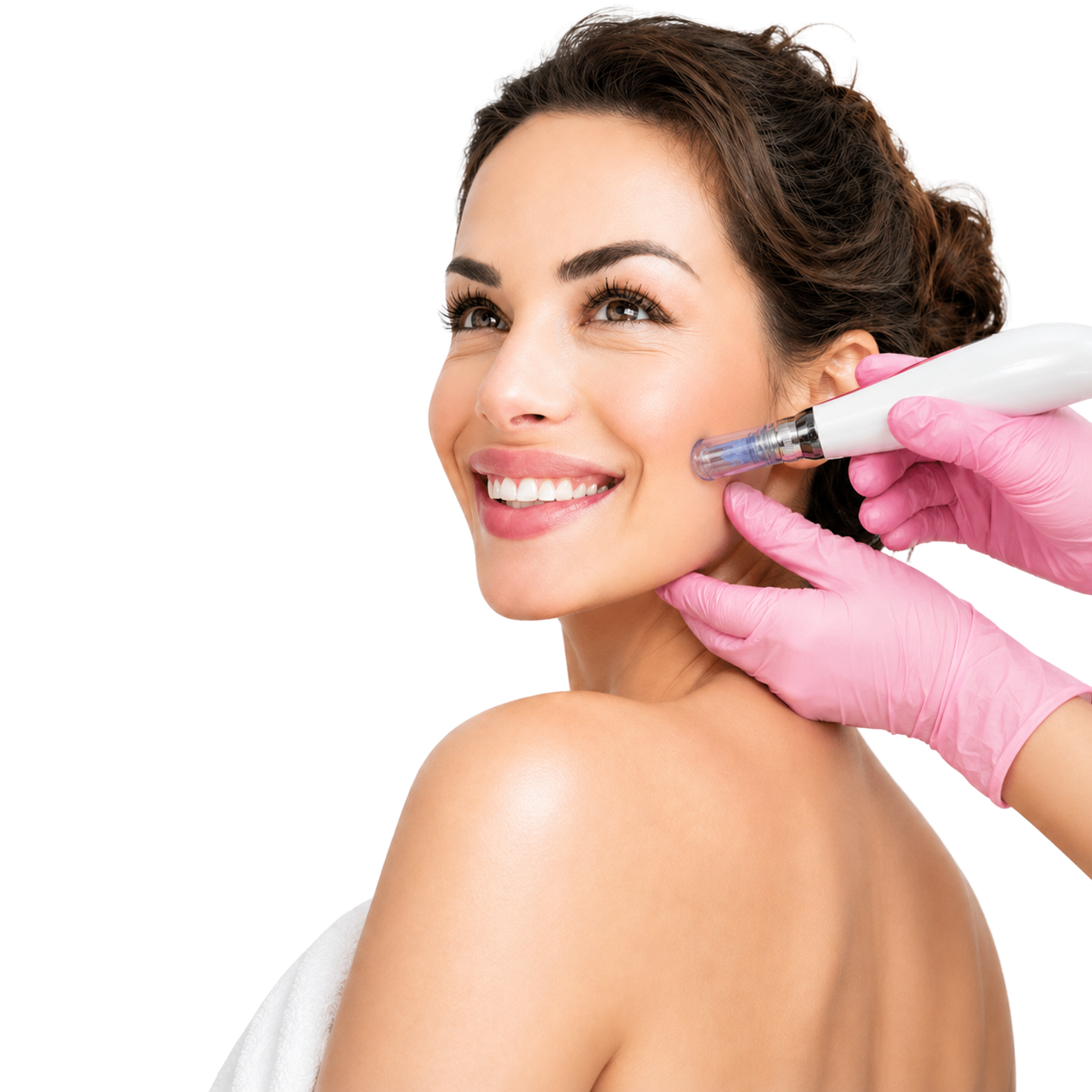
Microneedling, also called collagen induction therapy, percutaneous collagen induction (PCI), or simply skin needling, is a skin rejuvenation treatment that uses fine needles to create precise micro-channels in the skin. These tiny channels are intentional, controlled injuries that encourage your body to repair the skin by producing new collagen and elastin.

Collagen supports firmness, elasticity, and structure. Elastin helps skin bounce back. As collagen declines with age, acne damage, sun exposure, hormonal change, and inflammation, the skin can begin to show texture, enlarged pores, fine lines, and depressed scars. Microneedling is one of the most studied non-ablative ways to stimulate fresh collagen and elastin without using heat the way many lasers do.

Yale Medicine describes microneedling as a treatment that creates microscopic punctures to stimulate natural skin repair through dermal remodeling.

How Microneedling Works

Microneedling works in three carefully sequenced phases that mirror the body's own wound-healing cascade:

1. Controlled Micro-Channel Creation

A medical-grade electromicroneedling pen creates tiny channels in the skin at a depth selected for your skin concern, location, and skin thickness. Depths are typically 0.5–1.0 mm for fine lines and periorbital areas, and 1.5–2.5 mm for scars and thicker skin on cheeks or body.

2. Natural Healing Response

The skin recognizes these micro-injuries and begins repair. Platelets release growth factors (PDGF, TGF-β, VEGF, FGF, EGF), immune cells migrate in, and inflammation is tightly controlled. This signaling triggers cellular renewal and collagen-building activity.

3. Collagen and Elastin Remodeling

Over the following weeks and months, fibroblasts produce new Type III collagen which gradually matures into stronger Type I collagen, while elastin fibers reorganize. This is when you see lasting improvement in scars, pores, fine lines, firmness, and texture. The American Society for Dermatologic Surgery notes that microneedling uses the body's wound-healing response to form new collagen and elastin, improving texture and fine lines over time.

Why this matters in regenerative aesthetics

Microneedling at PearlMD sits within our broader regenerative aesthetics philosophy alongside PRP, exosomes, peptides, and biostimulators. Unlike resurfacing treatments that rely primarily on heat-based ablation, microneedling preserves the epidermis and works with your biology — making it a natural fit for clients who want to renew skin from within rather than sand it away.

Evidence-Based Medicine

The Science Behind Microneedling

Microneedling is one of the most heavily studied non-ablative procedures in modern aesthetic dermatology. The evidence base supports its role in acne scarring, photoaging, texture, pores, hyperpigmentation, and stretch marks, with a remarkably favorable safety profile when performed under medical supervision.

Acne Scars: Strongest Evidence

A meta-analysis of 12 randomized controlled trials (414 patients) showed microneedling significantly improved acne scar scores compared with control treatments, with zero cases of post-inflammatory hyperpigmentation reported. The pooled data reflected meaningful reductions in atrophic scar severity across rolling and boxcar scar morphologies.

Research published in Aesthetic Plastic Surgery documented significant improvements in acne scarring with minimal adverse effects.

Collagen and Skin Architecture

Histological studies show that a series of microneedling sessions can increase dermal collagen and elastin density. Some early work documented dermal collagen increases approaching 400% after a series of treatments, though magnitude depends on device, depth, technique, and patient biology.

Safety and Tolerability

A systematic review of microneedling across 51 studies (~1,029 patients) characterized the procedure as relatively safe with minimal adverse effects; the most common were transient redness, mild swelling, and pinpoint bleeding. Rare events include infection, herpes flare, transient hyperpigmentation, and allergic reaction.

PRP Combination Outcomes

Medical News Today summarizes evidence suggesting microneedling combined with platelet-rich plasma (PRP) may improve acne-scar outcomes and reduce downtime compared with microneedling alone, though more high-quality trials are still needed.

Regulatory Status in Canada

Microneedling is a controlled act in Ontario when it penetrates the dermis, and only regulated health professionals (physicians, NPs, RNs/RPNs operating under a medical directive) may perform it. Devices must be Health Canada licensed, single-use needle cartridges must be used, and a Personal Service Settings (PSS) compliant facility is required. PearlMD operates within all of these requirements as a physician-led medical clinic.

Benefits

What Microneedling Improves

Microneedling targets multiple skin concerns simultaneously, without using heat, harsh resurfacing, or surgery. It is one of the few treatments equally credible for acne scarring, photoaging, texture, and pigment when properly customized.

Skin Concerns Microneedling Treats

Microneedling for Acne Scars in Toronto

Acne scars are one of the strongest reasons clients seek microneedling. Unlike dark post-acne marks that sit closer to the surface, true acne scars are structural changes in the skin. Microneedling encourages collagen remodeling in these depressed areas, with documented improvements of approximately 50–80% in atrophic acne scarring across published series.

Best suited for:

  • Rolling acne scars
  • Mild to moderate boxcar scars
  • Uneven acne texture and post-acne roughness
  • Shallow pitted scars

Less ideal for:

  • Deep ice-pick scars (often need adjunctive subcision, TCA CROSS, or fractional laser)
  • Active inflammatory acne
  • Raised or keloid scars without medical assessment

Microneedling for Enlarged Pores

Large pores often appear more visible when skin has excess oil, congestion, laxity, or uneven texture. Microneedling refines the look of pores by improving the texture and firmness of the skin around them.

Microneedling for Fine Lines and Wrinkles

Fine lines around the cheeks, mouth, forehead, neck, and under-eye area improve as collagen builds, with typical reductions of 30–50% in fine lines and wrinkles over 3–6 months. Deeper, dynamic wrinkles may benefit from combination treatments such as RF microneedling, neuromodulators, facial injectables, or laser.

Microneedling for Hyperpigmentation and Melasma

Microneedling may be used cautiously for uneven tone, post-inflammatory hyperpigmentation, and melasma because it does not rely on heat the same way many lasers do. Pigment-prone skin requires careful depth, conservative protocols, pigment-safe skincare, and rigorous SPF.

Microneedling for Stretch Marks

Stretch marks are dermal structural changes. Microneedling improves their texture and appearance, with typical improvements of 30–70% — most pronounced on newer, red or purple striae and modest on mature white striae.

Microneedling for Skin Firmness and Crepiness

By supporting collagen and elastin renewal, microneedling can improve mild crepiness on the cheeks, neck, décolletage, and around the eyes — particularly when combined with PRP, biostimulators, or RF.

Microneedling for Hair Restoration (Scalp)

Scalp microneedling is used as an adjunct in androgenetic alopecia and diffuse thinning, often combined with PRP or topical minoxidil. The FDA notes it has not cleared microneedling devices specifically for hair-loss use, so claims should be conservative and treatment physician-supervised.

Microneedling for Dull Skin and Glow

For clients who want brighter, smoother, "glassier" skin, microneedling supports glow by renewing skin texture and improving hydration when paired with appropriate post-treatment serums and barrier repair.

Enhanced Product Absorption

Micro-channels temporarily increase transdermal absorption, allowing selected professional serums to reach deeper. The FDA notes it has not cleared microneedling devices for use with cosmetics, topical drugs, PRP, or blood products, so we use only physician-selected, medical-grade post-treatment products.

Candidacy

Who Is a Candidate?

You may be a good candidate for microneedling if you want to improve any of the following:

  • Acne scarring (rolling, boxcar, post-acne texture)
  • Enlarged pores
  • Uneven skin texture
  • Fine lines and early wrinkles
  • Dullness or loss of glow
  • Mild skin laxity or crepiness
  • Stretch marks and post-acne marks
  • Overall skin quality and resilience

Cleveland Clinic notes microneedling does not carry the same risk of discoloration as some heat-, light-, or laser-based resurfacing, which can make it useful for darker skin tones — though individual risk depends on skin history, device, depth, technique, and aftercare.

Safety

Who Should Avoid?

A consultation is required before treatment. You may need to avoid or delay microneedling if you have:

  • Active acne breakouts in the treatment area
  • Active cold sores or frequent herpes outbreaks without prophylaxis
  • Open wounds, cuts, or active infection
  • Eczema, psoriasis, or dermatitis flaring in the area
  • Keloid tendency or abnormal scarring history
  • Recent isotretinoin / Accutane use
  • Blood-clotting disorders or blood thinner use
  • Uncontrolled diabetes, immunosuppression, recent radiation or chemotherapy
  • Pregnancy or breastfeeding
  • Recent tanning or sunburn
  • Suspicious moles, lesions, or changing skin growths in the area
Treatment Variations

Types of Microneedling at PearlMD

Not all microneedling is the same. The right protocol depends on your concern, skin type, downtime tolerance, and goals. PearlMD offers a curated set of evidence-based options under one umbrella — regenerative aesthetics, customized to you.

Traditional Electromicroneedling (EMN)

A sterile pen-style device creates controlled micro-channels in the skin without heat. This is the foundational treatment for acne scars, pores, fine lines, texture, dullness, and overall skin renewal — and the safest entry point for most skin tones.

Best for: Acne scars · pores · fine lines · uneven texture · glow · mild stretch marks

RF Microneedling: Profound & Viva

RF microneedling combines microneedling with radiofrequency energy delivered through the needles. The thermal effect adds skin tightening and deeper remodeling, which can be helpful for laxity, deeper scars, wrinkles, and firmness.

At PearlMD, our RF microneedling protocols use Profound and Venus Viva — devices that combine RF heat with infusion technology for deeper remodeling, scar revision, and skin tightening in a single session.

Important Safety Information

RF Microneedling: Not Just "Microneedling Plus"

RF microneedling carries different risks than traditional microneedling. In 2025, the FDA issued a safety communication about reported complications with certain RF microneedling uses, including burns, scarring, fat loss, nerve-related concerns, and cases requiring medical or surgical treatment, underscoring the importance of proper technique, provider training, appropriate patient selection, and responsible treatment planning..

This is why provider expertise, device selection, conservative settings, and proper patient screening are non-negotiable. PearlMD only offers RF microneedling under physician oversight with appropriate Health Canada–licensed devices and conservative protocols.

Microneedling with PRP

Platelet-rich plasma (PRP) uses a component of your own blood, concentrated by centrifugation, that contains platelets and growth factors (PDGF, TGF-β, VEGF, EGF). PRP is applied during or after microneedling so growth factors flood the open micro-channels and amplify the regenerative response.

Best for: Acne scars · dullness · early aging · texture · clients interested in regenerative options

Microneedling with Exosomes

Exosomes are tiny vesicles released by cells that carry signaling molecules. Used as a topical post-microneedling boost, they support recovery, calm inflammation, and enhance glow. PearlMD offers both standard exosome and autologous exosome enhancements — claims are kept conservative and product selection is governed by Canadian regulatory guidance.

Best for: Redness-prone skin · texture · dullness · recovery-focused clients · post-procedure glow

Microneedling with PDRN

PDRN (polydeoxyribonucleotide) is a regenerative ingredient derived from purified DNA fragments. It supports tissue repair, anti-inflammation, and microvascular regeneration, making it a sophisticated adjunct during electromicroneedling for repair-focused protocols.

Microneedling with Hyaluronic Acid

Hyaluronic acid supports hydration and cushioning during treatment. It is often used for clients wanting plumpness, hydration, and glow rather than aggressive remodeling, and is a great entry-level add-on for first-time microneedling clients.

Treatment Comparison

Traditional vs RF Microneedling

Feature Traditional EMN RF Microneedling (Profound / Viva)
Energy UsedNo heat energyRadiofrequency heat + infusion
Main MechanismMechanical micro-injuryMechanical injury + thermal remodeling
Best ForTexture, pores, acne scars, glowLaxity, deeper scars, tightening, wrinkles
DowntimeUsually mild to moderate redness/flakingCan vary; may be more intense
Risk ProfileBleeding, bruising, infection, pigment changeAdds risk of burns, fat loss, nerve injury if misused
Skin TonesOften suitable with correct protocolRequires experienced provider and careful settings
CostUsually lowerUsually higher

Microneedling vs Chemical Peel

ConcernMicroneedlingChemical Peel
Acne ScarsBetter for texture and depressed scarsBetter for surface discoloration and congestion
Fine LinesStimulates collagen at depthSmooths surface lines
PigmentationHelpful, but must be cautiousStrong option depending on peel type
DowntimeRedness, tightness, flakingPeeling, dryness, sensitivity
Best ForTexture + collagenTone + exfoliation

Microneedling vs Laser Resurfacing

ConcernMicroneedlingLaser Resurfacing
Skin TextureGoodOften stronger
Acne ScarsGood for mild–moderate scarsStronger for deeper resurfacing
DowntimeUsually lowerOften higher depending on laser
Heat InvolvedNone in traditional EMNYes
Darker Skin TonesOften safer than aggressive lasersRequires careful laser selection
CostUsually lowerUsually higher
The PearlMD Experience

What to Expect at Your Appointment

Your treatment is built around a careful sequence designed for safety, comfort, and outcomes. Every step is physician-directed.

01

Skin Consultation & Assessment

We review your skin history, goals, medications, acne activity, pigment risk, scarring tendency, previous treatments, and skincare routine. Baseline photos may be taken for progress tracking.

02

Skin Preparation

The treatment area is thoroughly cleansed and prepared. Eye protection is provided where needed.

04

Electromicroneedling Treatment

A sterile, single-use needle cartridge is used with an automated pen device. Depth and technique are customized — typically 0.5–1.0 mm for fine lines and periorbital, and 1.5–2.5 mm for scars and thicker skin.

05

Regenerative Add-On (Optional)

Depending on your protocol, a professional serum, hyaluronic acid, PDRN, PRP, exosomes, or autologous exosomes are applied while micro-channels are open and absorption is enhanced.

06

Aftercare Instructions

You leave with clear, written instructions on cleansing, moisturizing, sun protection, and when to restart active ingredients — plus a direct line if anything feels off.

Results

When Will I See Results?

Microneedling results unfold over time, in line with how collagen actually remodels in human skin. Patience here is biology, not marketing.

Immediately AfterSkin usually looks red or flushed, similar to a sunburn. It may feel warm, tight, sensitive, or slightly swollen.
24–72 HoursRedness begins to calm. Skin may feel dry, tight, rough, or mildly flaky.
Days 3–7A fresh glow may appear as the surface calms. Makeup and active skincare are reintroduced only when your provider confirms it is safe.
Weeks 2–6Skin texture and tone may begin improving as new Type III collagen activity develops.
Months 3–6Collagen remodeling continues. Cleveland Clinic notes results may take 3–6 months to fully develop and many clients need multiple treatments.
Recovery

Microneedling Aftercare

Aftercare is where good treatments become great results — and where avoidable pigment, infection, or barrier issues are prevented. Here is the protocol we use at PearlMD.

For the First 24 Hours

Avoid:

  • Makeup unless approved by your provider
  • Sweating, intense workouts, hot yoga, sauna, steam room
  • Retinol, exfoliating acids (AHAs/BHAs), vitamin C if irritating, scrubs, alcohol-based products
  • Direct sun exposure, swimming pools, and hot tubs

Use:

  • Gentle cleanser and barrier-repair moisturizer
  • Mineral sunscreen once your provider approves
  • Hydrating, non-irritating skincare

For Days 2–7

Continue gentle skincare. Avoid retinoids, AHAs, BHAs, harsh exfoliants, and strong actives until cleared. The FDA notes skin can be more sensitive after microneedling, including to sunscreen, makeup, moisturizers, retinol, glycolic acid, menthol, capsaicin, and alcohol-containing products.

How to Prepare (Pre-Care)

  • Stop retinoids 48–72 hours before treatment
  • Avoid exfoliating acids (AHAs/BHAs) several days before
  • Avoid tanning and sunburn for 1+ weeks
  • Avoid waxing or aggressive facial treatments in the area
  • Disclose cold-sore history (we may prescribe prophylactic antiviral)
  • Disclose blood thinner use, isotretinoin use, pregnancy, or breastfeeding
  • Arrive with clean skin and no makeup if possible
Investment

Microneedling Cost in Toronto

Microneedling pricing in Toronto varies widely based on clinic, device, provider credentials, treatment area, and add-ons. Toronto market prices generally run $200–$700 CAD per session. At PearlMD, our pricing structure is transparent: a clear base treatment with optional regenerative enhancements you can layer in based on your goals.

Electromicroneedling Skin Renewal

1× EMN Face · 30 minutes · Skin Care

Our foundational electromicroneedling facial — including skin assessment, topical numbing, customized depth protocol, and aftercare guidance. The base on which any of our regenerative add-ons can be layered.

$250CAD
Per Session
Regenerative Add-Ons

HA+ Hydrating EMN

$100

Hyaluronic acid infusion for hydration, plumpness, and barrier support during your session.

PDRN Regenerative EMN

$200

Polydeoxyribonucleotide for tissue repair, anti-inflammation, and microvascular regeneration.

Exosome+ Regenerative EMN

$250

Exosome-based signaling boost to support recovery, calm inflammation, and amplify glow.

PRP+ Regenerative EMN

$550

Your own platelet-rich plasma, infused into the open micro-channels to amplify collagen and accelerate healing.

Autologous Exosome+ Regenerative EMN

$650

Our most advanced regenerative add-on — autologous exosomes for sophisticated cellular signaling, scar remodeling, and accelerated repair.

Toronto Market Price Ranges (For Reference)

For context, here is what comparable microneedling treatments typically cost across Toronto medspas and clinics:

TreatmentApproximate Toronto Range
Traditional facial microneedling$250–$500+ per session
Microneedling package of 3$700–$1,400+
Microneedling with PRP$500–$800+
Microneedling with exosomes$450–$900+
RF microneedling (Profound, Viva)$600–$1,200+
Neck, décolletage, body, stretch marksVaries by area
A note on insurance: Cosmetic microneedling is not covered by OHIP or private health insurance. Pricing is customized after consultation; multi-session and combination plans are available for clients pursuing a full series.
Trust & Expertise

Why Choose PearlMD?

Microneedling outcomes depend heavily on technique, device quality, needle depth, sterilization, skin assessment, and aftercare. The FDA recommends choosing a provider who is specially trained in microneedling and asking how devices are cleaned and whether a new cartridge is used for each session. Those questions are exactly the standard we hold ourselves to.

Physician-Led, Regenerative-First

Microneedling at PearlMD sits within a broader regenerative aesthetics philosophy alongside PRP, exosomes, peptides, biostimulators, and hormonal optimization — directed by Dr. Jennifer Pearlman. We treat skin as a window into systemic health, not as a surface to be sanded.

Medical-Grade Devices & Sterile Protocols

We use Health Canada–licensed automated electromicroneedling pens with sterile, single-use needle cartridges, plus Profound and Venus Viva for RF microneedling. Depth is customized — never a one-size-fits-all preset.

Honest Candidacy Screening

If microneedling isn't right for your skin or stage, we'll tell you, and we'll suggest the option that is. That conservative ethic is part of why our patients trust us long-term.

Built Into Your Skin Health Plan

Microneedling is most powerful as part of a longer skin and longevity plan — not a one-off. We sequence it with peels, lasers, face treatments, and skincare so each modality complements the others.

Frequently Asked

Microneedling FAQ

Quick, evidence-based answers to the most common questions we hear.

What is microneedling?

+

Microneedling is a minimally invasive skin treatment that uses fine needles to create controlled micro-channels in the skin. These micro-injuries stimulate collagen and elastin production, helping improve texture, acne scars, pores, fine lines, and overall skin quality.

Is microneedling good for acne scars?

+

Yes. Microneedling is one of the most evidence-supported treatments for atrophic acne scars, especially rolling and shallow boxcar scars. A meta-analysis of 12 RCTs (414 patients) showed significant scar improvement with zero cases of post-inflammatory hyperpigmentation. Deep ice-pick scars may benefit from combination treatments such as subcision or fractional laser.

Does microneedling hurt?

+

Most clients describe microneedling as tolerable. A topical numbing cream is applied 30–45 minutes before treatment. Sensations are usually described as mild pressure, warmth, or vibration rather than pain.

How long is microneedling downtime?

+

Downtime is typically 1–3 days. Redness similar to a sunburn, mild swelling, tightness, dryness, and light flaking are common. Most clients return to work the next day with mineral SPF and gentle skincare. RF microneedling and deeper protocols may extend recovery.

When will I see microneedling results?

+

Some clients notice glow within a week, but collagen results develop gradually. Texture, scars, and fine lines often improve over weeks to months, with maximum benefit usually seen 3–6 months after a full series.

Is microneedling safe for darker skin tones?

+

Traditional microneedling is often considered suitable for many skin tones because it does not use heat the way many lasers do. Darker or pigment-prone skin still requires careful protocol, conservative depth, and rigorous aftercare to reduce hyperpigmentation risk.

What is RF microneedling and what devices does PearlMD use?

+

RF microneedling combines microneedling with radiofrequency thermal energy delivered through the needles. At PearlMD we use Profound and Venus Viva — devices that combine RF heat with infusion technology for skin tightening, deeper scar remodeling, and laxity. The FDA has reported serious complications with certain uses, so provider expertise is critical.

What is microneedling with PRP?

+

Microneedling with PRP uses platelet-rich plasma from your own blood to support healing and collagen renewal. PRP delivers concentrated growth factors into open micro-channels, amplifying scar and texture results. PRP is offered at PearlMD as a +$550 add-on to electromicroneedling.

What are exosomes and how are they used?

+

Exosomes are tiny vesicles released by cells that carry signaling molecules. As a topical post-microneedling boost they support recovery, calm inflammation, and enhance glow. PearlMD offers a standard Exosome add-on at $250 and a more advanced Autologous Exosome add-on at $650.

What is PDRN microneedling?

+

PDRN (polydeoxyribonucleotide) is a regenerative ingredient derived from purified DNA fragments that supports tissue repair, anti-inflammation, and microvascular regeneration. We offer it as a $200 add-on for repair-focused electromicroneedling protocols.

Is microneedling better than a chemical peel?

+

Microneedling is usually better for texture and depressed scars; chemical peels are often better for surface pigment, congestion, and exfoliation. Many clients benefit from both, sequenced and spaced appropriately.

Is microneedling better than laser?

+

It depends on the concern. Laser can be stronger for resurfacing, but microneedling may be preferred for lower downtime, collagen stimulation, and certain skin tones. A consultation determines the best option for you.

Can I do microneedling at home?

+

At-home rollers are not the same as professional microneedling. They are typically more superficial, carry contamination risk if reused, and cannot replicate clinical depth or sterility. Professional treatment uses sterile single-use cartridges, controlled depth, and skin assessment.

How much does microneedling cost in Toronto?

+

Traditional microneedling in Toronto often ranges from approximately $250–$500+ per session, while RF microneedling, PRP, or exosome treatments may cost more. At PearlMD, electromicroneedling skin renewal starts at $250, with regenerative add-ons from $100 (HA) up to $650 (Autologous Exosomes).

Who should not get microneedling?

+

People with active skin infections, open wounds, active acne, eczema, psoriasis, cold sores, keloid history, blood disorders, immune suppression, recent isotretinoin use, pregnancy, breastfeeding, or certain medical conditions may not be candidates. A consultation determines suitability.

Local

Microneedling Near Me in Toronto

Looking for microneedling near you in Toronto? PearlMD Rejuvenation is located on Yonge Street in midtown Toronto, steps from St. Clair subway station, with convenient access from across the GTA.

Address

1650 Yonge Street
Toronto, ON M4T 2A2

Phone

416-644-1112

Clinic Hours

Mon–Tue · 8:00 AM – 5:00 PM

Wed–Thu · 8:00 AM – 7:00 PM

Fri · 8:00 AM – 5:00 PM

Sat · 10:00 AM – 3:00 PM

Sun · Closed

Transit & Parking

TTC: St. Clair Station (Yonge–University Line). Street parking and paid lots nearby. Easy access from the 401, DVP, and Gardiner Expressway.

Toronto Neighborhoods We Serve

PearlMD serves clients seeking microneedling and regenerative aesthetics from across Toronto and the Greater Toronto Area:

Downtown Yorkville Rosedale Forest Hill Midtown The Annex King West Liberty Village Leslieville Queen West North York Etobicoke Scarborough Vaughan Markham Mississauga Richmond Hill Thornhill

Book an Appointment

PearlMD Rejuvenation

Start Your Journey to the Best You

Back
Get in touch

Sign Up To Newsletter
Sign up to receive Pearls of Wisdom and exclusive offers in your inbox